
Bluefin Locksmith & Garage Door Team
16+ years of garage door service across Cape Cod · Licensed & Insured
Your garage door weighs 150–400 pounds. The only thing preventing it from crashing to the ground every time you open it is a pair of steel springs under enormous tension. When those springs start to fail — and they always do eventually — the consequences range from an inconvenient door failure to a genuinely dangerous situation.
After 16+ years of spring replacements across Barnstable County, we've seen the full spectrum. The homeowners who catch failing springs early save money and stay safe. The ones who ignore the warning signs end up with a crashed door, a bent panel, and sometimes an injury.
Here are the 5 signs that should send you straight to the phone to call a professional.
NEVER Attempt DIY Spring Replacement
Garage door springs store energy equivalent to several hundred pounds of tension. A spring that snaps unexpectedly can cause broken bones, severe lacerations, or death. This is one of the most dangerous home repair tasks that exists. Always hire a licensed professional — no exceptions.
Understanding Your Garage Door Springs
Most residential garage doors use one of two spring systems:
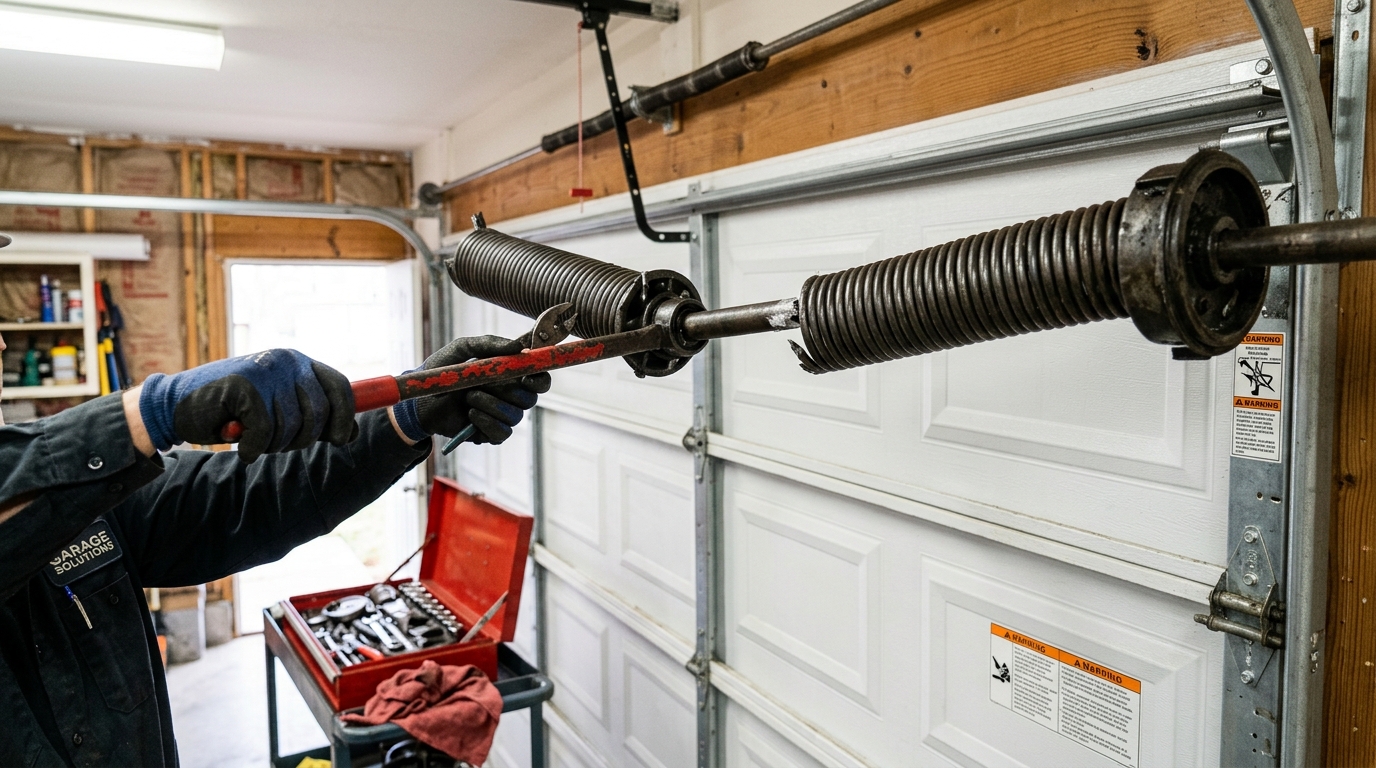
- Torsion springs (most modern doors): A single spring (or two on heavy doors) mounted horizontally above the door opening, wound tightly around a metal shaft. They twist and untwist as the door moves.
- Extension springs (older doors): Two springs mounted above the horizontal tracks on each side, stretching and contracting as the door moves.
Both types have a cycle life — typically 10,000 cycles (one open = one close = one cycle). For an average family using the garage 4 times per day, that's roughly 7 years. But in Cape Cod's coastal environment, expect that lifespan to shorten significantly.
The 5 Signs to Watch For
The Door Won't Open, Or Falls Fast
When springs fail completely, your opener motor will strain to lift the door but make little progress — or worse, the door may free-fall when you try to lower it. If your opener is running but the door isn't moving normally, disconnect the opener and try lifting manually. The door should feel light and stay at waist height when you let go. If it crashes down or feels like you're lifting a car, the spring system has failed.
Visible Gaps or Separation in the Spring
Look directly at your torsion spring above the door. A healthy spring has tight, evenly-spaced coils. A broken spring will have a visible 2–3 inch gap in the coils where it snapped. For extension springs, look for sections that appear stretched, kinked, or where the coils are no longer uniform. Any visible break means the spring has already failed — do not use the door.
A Loud Bang From the Garage
Many homeowners describe it as sounding like a gunshot inside the garage. That's a torsion spring snapping under tension — releasing all its stored energy at once. If you hear this sound (often in the middle of the night or on cold mornings), your spring has broken. You may see the cable on one side hanging loose. Do not attempt to use the door — call us immediately.
The Door Is Uneven or One Side Drags
If one of your two extension springs has weakened or broken, the door will hang lower on one side and appear crooked when opening or closing. You might hear scraping as it drags on the track. This uneven tension also puts enormous strain on the opener, cables, and rollers — turning a spring problem into a much more expensive repair if left too long.
The Door Feels Unusually Heavy
Disconnect your opener and manually lift the door. A properly functioning door with good springs should feel almost weightless — 8–10 pounds of effort at most. If it feels like you're lifting the full 150–400 pounds of the door itself, the springs are no longer providing the counterbalance they should. This is a spring failure in progress, not a normal condition.
Why Cape Cod's Climate Accelerates Spring Failure
Standard galvanized steel springs weren't designed for sustained coastal salt air exposure. In communities like Chatham, Falmouth, Mashpee, and Sandwich — where salt-laden air is a daily reality — we consistently see springs fail 2–3 years earlier than manufacturer ratings without proper maintenance.
Humidity causes micro-corrosion in the coils. Salt deposits accelerate surface pitting. And the constant thermal expansion and contraction from freeze-thaw cycles causes fatigue cracks to develop faster than they would inland.
Prevention: Lubricate Every 3 Months
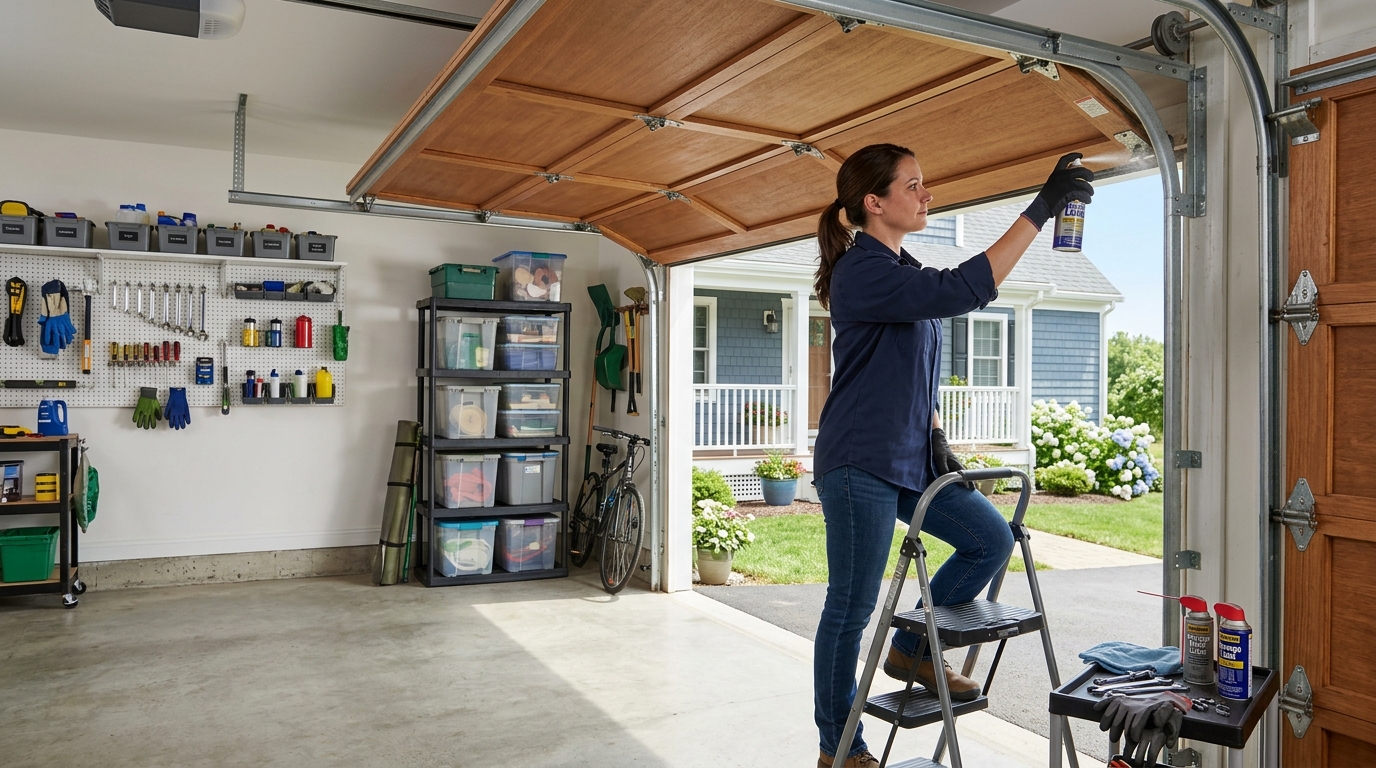
The single best thing you can do to extend spring life on Cape Cod is apply a quality lithium grease or silicone-based spray to the spring coils every 3 months. This displaces moisture and reduces friction. Takes 30 seconds. Adds years to spring life. Use WD-40 Specialist White Lithium Grease — NOT standard WD-40, which washes off and attracts grit.
Should I Replace One Spring or Both?
Always replace both springs at the same time — even if only one has failed. Both springs age at the same rate, accumulate the same number of cycles, and are subjected to the same coastal environment. When one fails, the other is typically weeks or months away from failure. Replacing both costs only marginally more than replacing one and saves a second service call.
Cost of Garage Door Spring Replacement on Cape Cod
- Single spring: $150–$250 (parts + labor)
- Pair of springs: $200–$350 (always recommended)
- Heavy door / commercial springs: $250–$450
- After-hours emergency: Small additional fee may apply
We provide a firm quote before starting work. Most spring replacements take 45–90 minutes. Learn more about our spring and opener repair service or confirm we serve your Cape Cod town.
FAQs
How long do garage door springs last on Cape Cod?
Standard springs are rated for 10,000 cycles (~7 years for average use). Cape Cod's salt air and humidity can reduce this to 4–5 years without proper lubrication and maintenance.
Can I replace springs myself?
No. This is one of the most dangerous DIY tasks in home repair. Loaded springs can cause severe injury when they snap. Always hire a licensed technician.
Should I replace one spring or both?
Always replace both. Both springs age at the same rate. When one fails, the other is close behind. Replacing both at once saves a second call and ensures balanced door operation.